Home / Austin Epoxy Flooring Estimate
Austin Epoxy Flooring Estimate: Planned Around Your Actual Floor
Request an Austin epoxy flooring estimate for a garage, flake, quartz, metallic, polyaspartic or commercial floor. Written scope, published price ranges, open 24 hours, 7 days at (512) 325-5434.
An Austin epoxy flooring estimate is a written plan for one specific floor: what condition the concrete is in, how it will be prepared, which coating layers go on it, how long the work and cure will take, and what it will cost. Austin Epoxy Flooring Pro prepares these estimates free of charge for garages, workshops, patios, interior floors and commercial spaces in Austin and Georgetown. Use the form below, call or text (512) 325-5434 24 hours a day, 7 days a week, or email austinepoxypro@gmail.com.
Request Your Estimate
Tell us your name, how to reach you, and a few lines about the floor: rough size, location in Austin, what the surface looks like now, the finish you have in mind and when you would like the work done.
Why an Estimate Starts With the Concrete, Not the Color
Most people begin by thinking about the finish: gray flake, a speckled quartz, a glossy metallic. Those choices matter, but they come last. Coatings succeed or fail mainly because of what happens before the first coat. An estimate that skips straight to color samples without discussing the slab is missing the most important part.
Here is what we look at first, and why each item ends up in the written scope:
| What we check | Why it matters | How it shows up in the estimate |
|---|---|---|
| Old paint, sealer or coating | New material can't bond to a failing layer | Removal by grinding, listed as its own step |
| Oil and fluid stains | Contamination can stop adhesion | Degreasing and grinding, sometimes spot treatment |
| Cracks and joints | Slab movement can telegraph through a coating | Specific repair method for each crack type |
| Spalls and pitting | Low spots trap material and show in the finish | Patching before the base coat |
| Moisture | Vapor pressure can lift a coating | Testing, and a moisture-tolerant primer if needed |
| Surface texture | Very smooth slabs resist bonding | Grinding profile to open the surface |
| Edges and transitions | Door thresholds and walls are where wear starts | Edge grinding and termination details |
The Systems an Estimate Can Include
Your estimate names a system, not just "epoxy." Here are the options we commonly price for Austin floors.
Garage and residential floor coatings
The standard garage system is a ground slab, a pigmented base coat, a broadcast layer and a clear topcoat. It handles parking, foot traffic and the usual drips. Published garage ranges on our homepage are $800–$1,200 for one car, $1,400–$2,200 for two cars and $2,000–$3,200 for three cars.
Full-flake and partial-flake finishes
Full-flake means vinyl chips are broadcast until the base coat is completely covered, then the excess is scraped and the floor sealed. It gives the most texture and hides dust well. Partial flake scatters fewer chips over a solid base, giving a flatter look that shows more of the base color. The estimate states which one is priced, because the material and labor differ.
Quartz and decorative systems
Quartz systems broadcast colored quartz granules instead of vinyl chips. Epoxy quartz flooring is dense and hard-wearing, with a sandpaper-like texture that can be tuned by the topcoat thickness. It is common in commercial kitchens, restrooms, locker rooms, veterinary areas and any space that is hosed down often. For homes, quartz is used on patios, laundry rooms and mudrooms.
Metallic floor systems
Metallic epoxy uses pearlescent pigments that are worked by hand to create movement and depth. It is popular for showrooms, offices, bars and interior living spaces. Because the finish is glossy and smooth, it shows any flaw in preparation. Our homepage range is $6–$12 per square foot.
Polyaspartic coating options
Polyaspartic coatings cure fast and resist yellowing in sunlight. They are used as topcoats over epoxy and flake, or as full systems when a homeowner or business needs the space back quickly. The homepage lists polyaspartic from $3–$7 per square foot.
Commercial and shop-floor planning
Commercial estimates also look at forklifts and pallet jacks, chemical exposure, washdown, temperature, drains and operating hours. The homepage lists commercial epoxy from $2–$5 per square foot, with the final figure depending on the system and the schedule. More on our commercial epoxy flooring page.
Polyaspartic vs Epoxy in an Estimate
When both are reasonable, the estimate can price them side by side. The comparison usually comes down to four questions:
- How soon do you need the floor back? Polyaspartic gets you back on the floor sooner. Epoxy needs more cure time.
- Does sunlight hit the floor? A garage door open to west sun is a good reason for a polyaspartic topcoat.
- Does the slab have small flaws? Epoxy builds thicker and fills minor irregularities better.
- What is the budget? A hybrid system often balances cost and performance.
For a longer comparison, read polyaspartic vs epoxy floor coating in Austin.
Compare Options Before Choosing a System
| Option | Planning question |
|---|---|
| Epoxy | What preparation, cure schedule and intended indoor use does the proposed system require? |
| Polyaspartic | Is a faster return to service important, and what product specifications apply? |
| Flake | What coverage, texture, broadcast approach and topcoat are included? |
| Quartz | Is a more textured broadcast appropriate for the space and the cleaning routine? |
| Metallic | Is the slab smooth enough, and is the look worth the added labor? |
Compare the written scope, not only the color sample or advertised price.
A Sample Estimate, Line by Line
Here is roughly how a written estimate for a two-car Austin garage reads. The wording varies, but these are the parts you should expect.
- Project: Two-car attached garage, approximately 450 square feet, plus garage door threshold.
- Existing condition: Bare concrete, light oil staining at both parking spots, two hairline cracks and one wider crack across the center, no existing coating.
- Preparation: Diamond grind the full floor and edges; degrease stained areas; vacuum.
- Repairs: Fill hairline cracks; rout and fill the wider crack with a flexible or rigid repair material as appropriate.
- System: Pigmented base coat; full broadcast of flake in the chosen blend; scrape and vacuum; clear polyaspartic topcoat.
- Exclusions: Moving stored items; stem walls and the step into the house unless added; repairs to structural damage.
- Schedule: Installation in one day, weather permitting.
- Cure: Light foot traffic and vehicle return times stated in writing.
- Price: Total in writing, within or near the published two-car range depending on condition.
- Care: Cleaning instructions and products to avoid.
If an estimate you receive from anyone is missing several of these lines, ask about them.
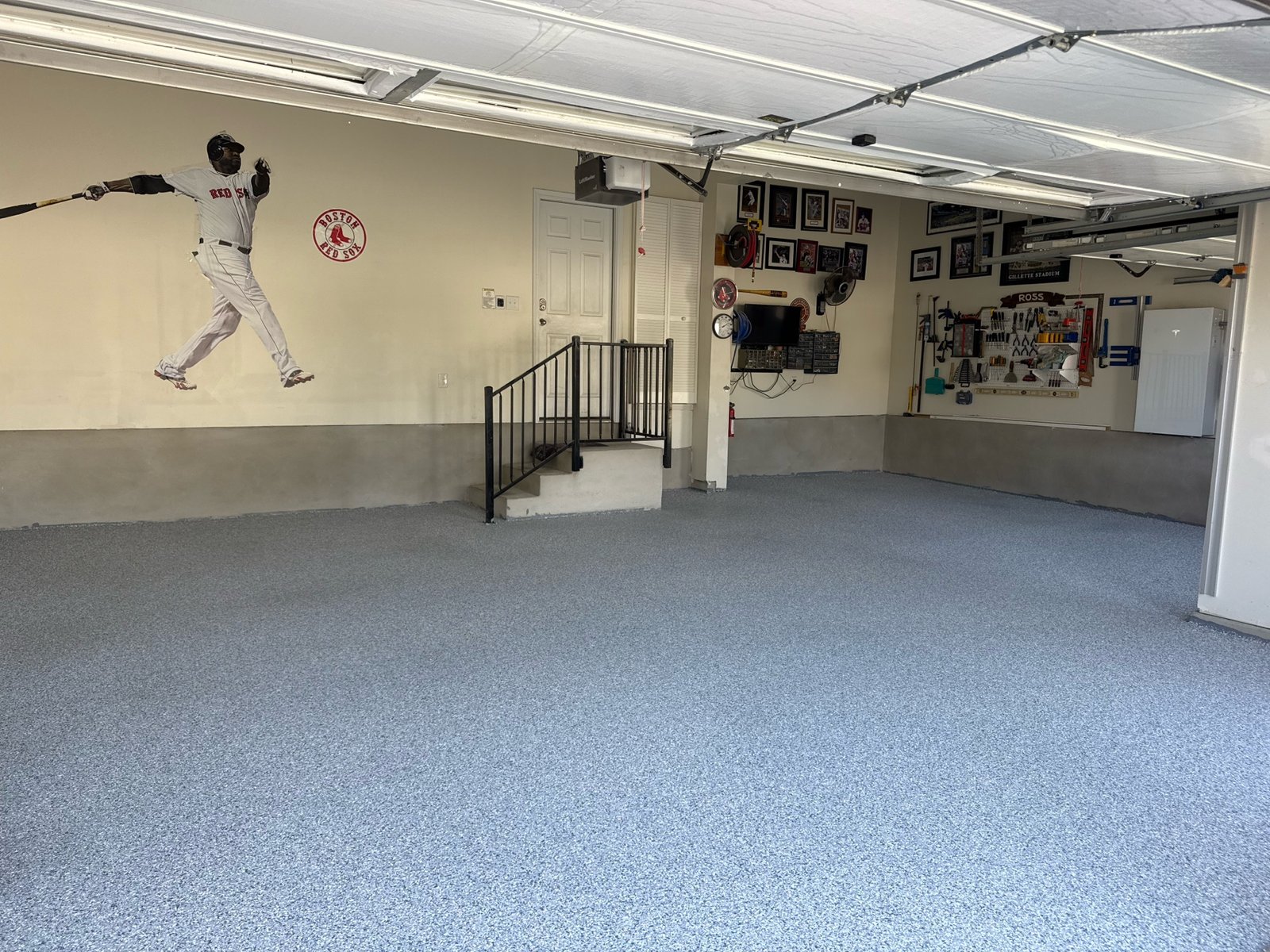
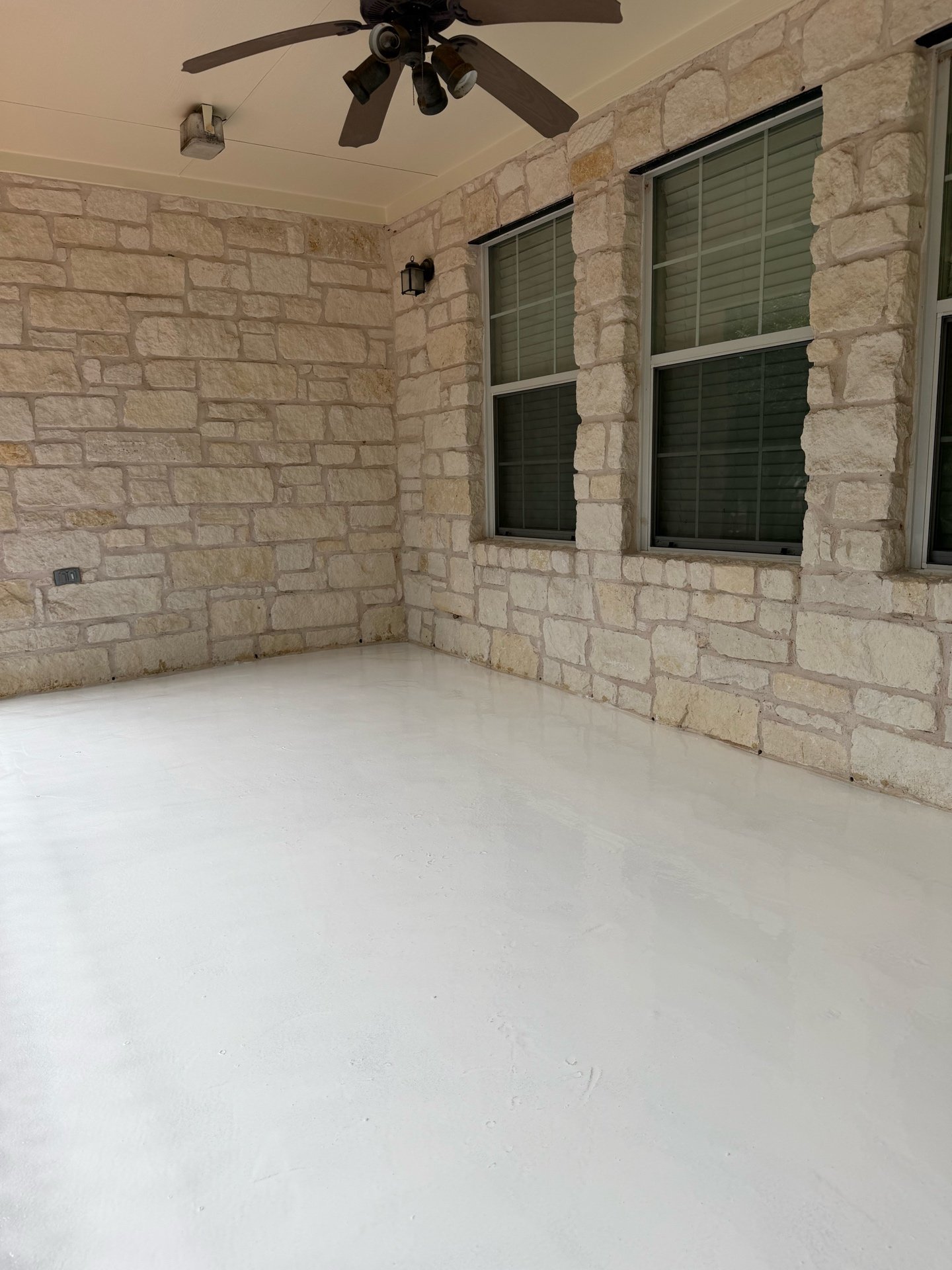
Owner-Supplied Austin Project Photos
The following owner-supplied photographs are shown as visual examples only. They don't by themselves establish product brand, square footage, price, installer identity or long-term performance.
Austin Neighborhood Notes for Estimates
Austin's neighborhoods differ in age and construction, and that affects estimates.
Older central neighborhoods
Areas such as Hyde Park, north of the university, have many early 20th-century homes. Garages there are often detached, sometimes later additions, and the slabs may be thinner, uneven or patched. Expect the estimate to spend more time on cracks, levelness and old paint.
Redeveloped areas
Mueller, built on the site of Austin's former municipal airport, is a newer planned community with modern slabs and attached or alley-loaded garages. Slabs there are usually in good shape, but new concrete can be very smooth and may need careful grinding to accept a coating.
Southwest Austin
Neighborhoods like Circle C Ranch in southwest Austin sit near the Edwards Plateau, with a mix of rocky ground and clay. Homes are mostly from the 1990s onward, with two- and three-car garages that often have years of tire marks and stains. Estimates there usually focus on stain removal and crack treatment.
The city as a whole
Across Austin, expansive clay soils, hot summers and moisture in older slabs are the three factors we mention most. Each is something we check on site and write into the scope when it applies.
Georgetown Estimates
We also prepare estimates in Georgetown, north of Austin in Williamson County. Georgetown has a historic downtown and many newer subdivisions, including large active-adult communities where homeowners often want a garage that is easier to clean and less slippery. The estimate process there is the same; see our epoxy flooring Georgetown TX page for local detail.
Commercial Estimates by Business Type
Commercial estimates follow the same logic as residential ones, but the questions change with the business.
- Restaurants and commercial kitchens. Hot water, grease, cleaning chemicals and constant washdown. Estimates usually price a quartz or textured system with coved edges where the floor meets the wall, and they address drains and slopes.
- Warehouses and distribution space. Forklift and pallet-jack traffic, long open areas and joints that move. Estimates focus on joint treatment, coating thickness and how the work can be phased around operations.
- Auto repair and detailing shops. Oils, brake fluid, solvents and hot tires. The topcoat choice and chemical resistance are central to the estimate.
- Clinics, salons and offices. Appearance, easy cleaning and quiet, low-odor installation. Estimates often schedule work outside opening hours.
- Electronics, labs and server rooms. Static control may be needed. That is a specialized system covered on our ESD flooring page.
- Retail and showrooms. Looks matter most, so metallic or decorative systems are common, along with careful scheduling to avoid closing the store.
For any of these, sending a floor plan, photos and your operating hours with the first message speeds the estimate up considerably.
Common Estimate Mistakes to Avoid
A few patterns cause problems later. They are worth watching for in any estimate, ours included.
- No mention of grinding. Coatings applied over unprepared concrete are a common reason for peeling.
- "Two coats" with no detail. Two coats of what, and how thick? The layers should be named.
- Cracks ignored. If the slab has visible cracks and the estimate doesn't mention them, ask why.
- No cure times. You need to know when you can walk on the floor and when you can drive on it.
- Price per square foot with no measurement. A rate is only meaningful once the area is confirmed.
- Exclusions left unstated. Steps, stem walls, moving items and major repairs should be addressed one way or the other.
Planning Your Estimate Around Austin Weather
Central Texas weather shapes scheduling. Summer installations start early in the morning, before slabs heat up, which is why our crews start early. Cold fronts in winter slow curing, and humid spells can affect some products. When the estimate lists a schedule, it assumes typical weather for the season, and we will move dates if a forecast makes conditions poor for coating work.
What a Lower or Higher Number Usually Means
If two estimates for the same floor differ widely, the difference nearly always comes from scope rather than markup. The lower one may skip grinding, use a thinner system, leave out the topcoat or exclude crack repair. The higher one may include moisture mitigation, stem walls, extra repairs or a premium topcoat. Lay the scopes side by side, line by line, before deciding which is the better value for your floor.
Why Request a Written Estimate?
Existing coatings, oil, cracks, moisture, access, edges, stored items, sunlight, traffic and the desired finish can each change the preparation and schedule. A written estimate gives you a clear basis for comparing systems and for asking another company what their price includes. It also protects both sides: you know what you are paying for, and we know what we have agreed to do.
How Long the Estimate Process Takes
For most garages the sequence is short: a first call or text, a visit, then the written estimate. Commercial projects can take longer because drawings, specifications and schedules need to be reviewed. We answer calls and messages 24 hours a day, 7 days a week, and messages sent outside those hours are answered the next business morning.
Things That Make an Estimate More Accurate
- Clear the floor where you can. We don't need an empty garage, but we need to see most of the slab.
- Tell us about past work. Old sealers and coatings are not always obvious.
- Mention chemicals. Brake fluid, solvents, pool chemicals and fertilizer all matter.
- Share deadlines. A move-in date or a business reopening shapes the system choice.
- Say what you dislike about the current floor. Dust, stains, slipperiness and appearance point to different solutions.
After You Receive the Estimate
Read it through and write down questions. Call or text and we will go through it. If you would like a second option priced, such as quartz instead of flake or a polyaspartic topcoat instead of an epoxy one, we can add it. There is no obligation to proceed, and no pressure to decide on the spot.
Customer Feedback
Austin Epoxy Flooring Pro has a 5.0 rating on Google. When you read reviews of any installer, look for comments about preparation, communication and how floors have held up over time.
Related Pages
- Epoxy flooring Austin TX free estimate
- Garage floor epoxy quote Austin TX
- Polyaspartic floor coating Austin TX
- Metallic epoxy flooring Austin TX
- Garage floor epoxy Austin TX
- Contact us
Request a Free Estimate
Call or text (512) 325-5434 (open 24 hours, 7 days a week) or use the free estimate form. Send the approximate square footage, how the space is used, photos of the current concrete, and your timing.
Frequently Asked Questions
What is included in an Austin epoxy flooring estimate?
Measurement, a concrete assessment, the recommended system, preparation and repair steps, exclusions, schedule, cure times and a total price, all in writing.
Is the estimate free?
Yes. There is no charge and no obligation.
Can you price more than one system?
Yes. We can show flake, quartz, polyaspartic or metallic options side by side when more than one suits the floor.
How much is a three-car garage?
Our published range is $2,000–$3,200. The written estimate sets the exact figure after we see the slab.
Does the form store my information?
No. Submitting the form opens your email app addressed to austinepoxypro@gmail.com. Details are not stored on this website.
What is epoxy quartz flooring?
A system where colored quartz granules are broadcast into epoxy and sealed. It is dense, textured and common in commercial kitchens, restrooms and other wet areas.
Do you prepare estimates outside Austin?
We take on projects in Austin and Georgetown. Call if you are nearby and we'll tell you honestly whether the project is a fit.
When can I reach you?
24 hours a day, 7 days a week, at (512) 325-5434.